istanbul, izmir, antalya, ankara escort bayan linkleri
istanbul escortAntalya Escortizmir escort ankara escort


Join the Flock! Litfuse Publicity Group blogger


Enter your email address:

Delivered by FeedBurner


January 18, 2007

Chris Anne, editor of C3 Mothering, recently wrote to give me this award. Thank you, Chris!

She has a beautiful site and is gathering a variety of articles. I hope you’ll visit and see what she’s got going on over there. C3 Mothering stands for Crunchy, Conservative, Christian.

“Crunchy Con is a term coined by Rod Dreher in his book: Crunchy Cons: How Birkenstocked Burkeans, gun-loving organic gardeners, evangelical free-range farmers, hip homeschooling mamas, right-wing nature lovers, and their diverse tribe of counter-culture conservatives plan to save America (or at least the Republican Party).”

As I’m not quite sure what crunchy means, I haven’t submitted an article yet, but if you feel like this might be your niche, go for it!


January 17, 2007

I can’t believe this video — this is the most adorable thing I’ve ever seen! It’s the little Shopping Penguin who waddles to the fish store to buy fish for his family. Now my kids want to go to Japan to meet this little guy. You gotta see his Pingu backpack!

By: Heather Ivester in: Family,Japan,Travel | Permalink | Comments & Trackbacks (1)


If you’re a writing parent, the time you have to write is more precious than gold. You need to write; God has given you talent and a calling, yet does it ever seem like an impossible dream that your words will be published?

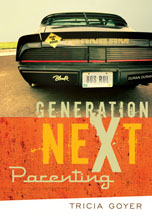
Today, we’re visited by a PROLIFIC, talented young mom, who has written a million books. OK, not a million, but Tricia Goyer is one of the most amazingly busy writers I know. We had a book giveaway here in November, and one of you won a free signed copy of Tricia’s newest non-fiction book for parents, Generation NeXT Parenting.
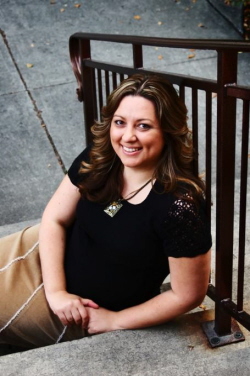
Tricia is extremely active in the blogosphere, giving away her words to encourage and uplift all of her readers. Her personal blog is called It’s a Real Life, but she also encourages aspiring writers at her Writer Quotes blog which contains favorite quotes and Tricia’s thoughts on them.

She’s a member of the Christian Authors Network (CAN) where she blogs about marketing for writers. She’s a regular contributor to Girls, God, and the Good Life, along with several other authors who specialize in writing for teen girls. You can also read her encouragement for writing parents at Writer … Interrupted.

Since Tricia also writes historical novels, she contributes to Favorite PASTimes, where several writers explore insights on writing, reading, viewing and researching historical fiction. And there’s more! Her website, Unforgettable Stories of WW II is another place Tricia Goyer shares her passion for World War II memories. She has interviewed many veterans to help research her historical novels.

Welcome to Mom 2 Mom Connection, Tricia! Can you tell us how you got started in writing?

Thanks for having me!

I started writing in 1994. I was 22-years-old and pregnant with my THIRD child, no joke! A friend at church wanted to become a writer and this struck a chord with me. I didn’t think it was something real people could do.

Cindy Martinusen and I attended our first writer’s conference in 1994. A few years (and many rejections) later, I started writing articles. Then I worked on book projects . . . and soon they were getting published too.

I basically attended conferences, read books on writing, and taught myself by trial and error.

How did you make time in your day for writing during those early years? What kept you going?

I used to have a wonderful schedule. Oooo, I long for those days!

Anyway, every afternoon, I had “writing time.” My little kids knew they had to entertain themselves. Since I had three kids in five years, they played well together . . . and I wrote.

Small successes kept me going. Some of my first stories were published in small papers, and I made $10 for the whole story. It didn’t matter . . . I was published.

What was your first book about?

My first non-fiction book was Life Interrupted: The Scoop on Being a Young Mom. And let me tell you it is amazing — a gift from God — that I could offer any type of advice to others. At one time my life was such a mess.

I suppose I was able to write this book because I’d been a teen mom. I started mentoring teen moms because I could understand. I had a heart for their struggles. Yet, my life was transformed as I made good choices — just one tiny step after another. This book is all about helping teen moms do just that.

How did you get into writing novels? What has been the best thing about becoming a novelist?

When I first started writing, my goal was to write novels. I wrote articles and other non-fiction to build up credits under my name. (Then I discovered I liked it. Go figure!)

I had about six unfinished novels on my hard drive when I visited Europe with friends in 2003. There I came upon a story from WWII I knew I had to write.

It’s the true story about 23 American soldiers opening the gates to Gusen and Mauthausen concentration camps and freeing 25,000 prisoners. It’s also a story about a Nazi wife caring for the people her husband was once bent on destroying. Writing that novel led to more stories, more veterans to interview, more novels. And the rest — as they say — is history.

I’m sure it must be so interesting to interview WWII veterans! You now have a new book out for Gen-X parents. Who is a Gen-X parent?

Gen Xers are those born between 1961-1981 . . . or another way to think of it is that if your teen years somehow touched the 80s, then you are one of us. My book is called Generation NeXt Parenting.

Why did you feel a passion for writing to this group?

I wanted to write for this group because our parenting is SO different than the parenting that has gone before us. The issues we face are waaaaay different than the ones our moms faced.

Also, our growing up years deeply affected how we parent. For example, since we grew up with Missing Children on the side of our milk cartons, we have a lot of fears concerning our kids. And since many of us had a latch-key existence, while both parents worked, we (as a generation) try to overcompensate with our kids.

We want to give our kids all, yet we get overwhelmed. My book is to offer hope . . . and help — not as an expert, but as someone who is in the same boat and understands.

What are the strengths and weaknesses of this generation of parenting?

Our strengths are:
Dads are more involved than ever.
We have a “family first” mentality.
We have more resources than those who’ve gone before us.
We are willing to sacrifice for our kids.

Yet here are some weaknesses:
We have too many opportunities and often overextend ourselves and our kids.
We want to give our kids everything we didn’t have.
We live in a have-it-all, have-have-it-now world.
We are flooded with all types of media, and get overwhelmed.

How can we overcome our weaknesses and depend on God more?

In the book, I have tons of little tips on how we can seek God’s help in these many areas, but overall we need to realize two things:

1. God placed us as parents in this time in history for a purpose.
2. He can strength us and give us wisdom for our task.

Do you have any advice for today’s moms?

My number one piece of advice is: Seek God. Pray, asking Him to change your heart. Follow Him in obedience to the small things He asks you to do.

My day goes 100% better when I realize it’s all not up to me. What a concept!

Tricia, you’re involved in several blogging communities. How did you get interested in blogging?

I blog because I have the heart of a teacher. Anything I learn, know, believe, I want to SHARE. I can’t just ponder it. I have to write about it. I suppose that is how truth becomes concrete to me, by writing it out.

Also, I blog because I LOVE feedback. Seeing COMMENTS are one of my favorite things.

That’s a Gen X trait too, by the way. We want the gold star. We want instant feedback and a pat on the back. Comments on blogs give me that feedback. Is that crazy, or what?!

Ha! I can relate to that trait. What do you enjoy most about being a mom who is also a writer?

I LOVE that I can be home with my kids. Since we homeschool, we spend most of every day together.

I LOVE that I can schedule my own time. I can work around dentist appointments, basketball practice, and stop in the middle of the day to play Xbox if I want to.

I LOVE when my writing benefits my family. For example, we get many free books. My kids have been with me to interview WWII veterans (what an opportunity!). I review curriculum, which I get for free. I’ve even gotten my family backstage passes to the Newsboys because of a writing friend. THAT is when my kids thought I’d “made it.”

How old are your kids?

My kids are 17, 14, and 12 now. We homeschool and all three play basketball. (Go Crusaders!) My oldest son, Cory, is also taking college classes. (He’s a Junior and gets both high school and college credits.) My daughter, Leslie, loves singing and playing the piano. My son, Nathan, thinks hanging out and playing with his friends is the coolest thing on earth.

We’re also in the process of adopting a baby girl from China . . . which we’ll most likely have by Winter 2007.

Wow. I hope things go smoothly with your adoption. I’m sure you’ll find much to share about that experience. Thanks for visiting with us here and for passing along your wisdom and encouragement!

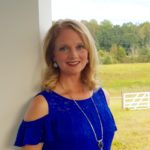
Tricia Goyer was named Mount Hermon Christian Writers Conference “Writer of the Year” in 2003. She was a finalist for the Gold Medallion Book Award and she also won ACFW’s “Book of the Year” for Long Historial Romance in 2005 and 2006. You can learn more about her at Tricia’s Loft.


January 16, 2007

This was sent to me by Active Christian Media.

Today is declared Religious Freedom Day by our President. This is more meaningful to me as I just finished reviewing C. Hope Flinchbaugh’s book, Across the China Sky, about the religious persecution of the Christian church in China.

I thank God for our freedom to worship when and where we please, and I confess that I take it for granted far too much.


A Proclamation by the President of the United States of America

On Religious Freedom Day, we commemorate the passage of the 1786 Virginia Statute for Religious Freedom, authored by Thomas Jefferson, and we celebrate the First Amendment’s protection of religious freedom.

Across the centuries, people have come to America seeking to worship the Almighty freely. Today, our citizens profess many different faiths, and we welcome every religion. Yet people in many countries live without the freedom to worship as they choose and some face persecution for their beliefs. My Administration is working with our friends and allies around the globe to advance common values and spread the blessings of liberty to every corner of the world. Freedom is a gift from the Almighty, written in the heart and soul of every man, woman, and child, and we must continue to promote the importance of religious freedom at home and abroad.

NOW, THEREFORE, I, GEORGE W. BUSH, President of the United States of America, by virtue of the authority vested in me by the Constitution and laws of the United States, do hereby proclaim January 16, 2007, as Religious Freedom Day. I call on all Americans to reflect on the great blessing of religious liberty, endeavor to preserve this freedom for future generations, and commemorate this day with appropriate events and activities in their schools, places of worship, neighborhoods, and homes.

IN WITNESS WHEREOF, I have hereunto set my hand this eleventh day of January, in the year of our Lord two thousand seven, and of the Independence of the United States of America the two hundred and thirty-first.

GEORGE W. BUSH

By: Heather Ivester in: Faith | Permalink | Comments Off on Religious Freedom Day, 2007


Do you spend the month of January looking around your house asking, “What can I do with all this stuff?”

After all the Christmas packages have been unwrapped and put away, the ornaments nestled safely back in the attic, and the tree stored or sent off to the chipper — many of us feel overwhelmed at the task of organizing. RE-ORGANIZING.

This is the year for you (and me!) to make some big changes. Instead of heading to the store to buy more storage boxes, why not pare down our stuff and simplify?

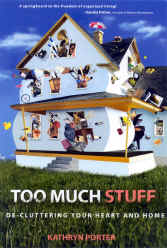
I was thrilled to be contacted by author Kathryn Porter, who is offering some advice for us overwhelmed moms. A former clutterbug, she’s now a professional organizer and popular speaker who shares her faith-based message on how to keep a clean house. You can read more about her at her website, Clutterwise.


Kathryn, can you tell us how you define clutter?

Clutter is anything that does not enhance our homes or enrich our lives. Sometimes we think when something is expensive that it’s enriching, but that’s not always the case.

What do you suggest we do first if we’re feeling completely overwhelmed by our clutter and don’t know where to start?

When you don’t know where to start, start with the easy stuff:

• Is there trash around the house that missed the garbage pail?
• Are there clothes with holes, stains, or in otherwise disrepair?
• Is there junk mail, expired coupons, or old newspapers laying around?

How can we stop clutter from coming into our homes?

I’m glad you asked this question. This is an essential component to maintaining a presentable home. Anyone can de-clutter a room, but how do we keep the clutter from coming back?

It requires a lifestyle change that starts with establishing boundaries. Learning to say no is probably the number one boundary issue when it comes to clutter. It’s hard to say no to sales at department stores, unwanted gifts, and helping a friend by storing their extra couch.

Even too much stuff on our calendars can end up cluttering our homes. We have less time to clean, while at the same time we’re accumulating more stuff from all the activities we’re involved in. I talk about this in my book, but here are some examples of how to set boundaries in order to keep the clutter at bay:

Boundaries with books:
How many books do you own? Do you have boxes stacked on your closet floors without a home? Limit the number of books you own to what comfortably fits into your bookcase.

Boundaries with people:
Are you storing other people’s stuff? Stop opening your home as a storage facility for friends and family. Let them deal with their own clutter so you can effectively deal with yours. Also, be careful about borrowing other people’s stuff, particularly if you have a tendency to forget to return things.

Boundaries with giving:
Do you go overboard for birthdays, Christmas, and other special occasions? Simplify your giving habits. Instead of buying Christmas gifts in January that you have to store all year long, wait until October for purchasing holiday presents. Consider giving gifts that don’t cause clutter such as treating someone to dinner, a movie, or play.

These are all great ideas! Kathryn, do you think it’s possible to live clutter-free?

I don’t think it’s possible to live completely clutter free because we constantly create more everyday. If it’s not of our own doing, then it comes in our mailbox or as a well-intentioned gift. The goal is to create a home that’s both functional and attractive, while minimizing the clutter.

Do you have any suggestions for mothers who are constantly dealing with the in-flow of papers — from kids’ schoolwork, teachers’ notes, birthday party invitations, newspapers, magazines, thank-you notes, grocery lists, notes-to-self. HELP! I speak from experience, unfortunately.

I could talk about paper for an hour and still have more to say so I’ll try to keep it simple. When it comes to a house drowning in paper, here are a few things you can do to plug the holes that let the paper in, while controlling what’s already there:

1) Take your name off mailing lists. If you don’t see the sales ads, you won’t be as tempted to buy more stuff.

2) Cancel unnecessary magazine and newspaper subscriptions. You won’t feel obligated to read them if they’re not coming through your door, nor will they create extra trash for you to toss.

3) Consolidate bank accounts. The simpler your money management routines, the less paper it will require.

4) Cancel credit cards. We tend to buy more using plastic because hard-earned cash in hand hurts us a little more when we spend it.

5) Use electronic bill paying. Be careful when giving out account information and be sure to track the debits, but this is a popular option to make life easier.

6) Implement a calendar system to track appointments. Limit memos and sticky notes by having a central location in which to record activities.

7) Create guidelines for keeping children’s schoolwork and stick to them. Create standards such as keeping only the best work or assignments that require creativity such as writing or artwork.


Can you tell us about your book? Who would most benefit from reading it?

Anyone who feels overwhelmed by clutter would benefit from my book. I write from the trenches.

It’s not just about another method to get organized. The focus really is on helping people determine what’s meaningful and what’s clutter, but there’s lots of organizing tips too.

I’ve also heard from readers who are self-described neat freaks telling me they appreciate my book because it’s helped them understand friends and family with messy tendencies. I even had one woman come up to me after a speaking engagement who said that she never considered herself a packrat until she heard my story. I’m learning that a lot of people think the way I used to think: “It’s not clutter! It’s just my stuff and my stuff needs a home!”

Do you have any closing bits of advice for the woman who feels like she’ll never emerge from her chaotic home in one piece?

Never give up. De-cluttering is a process, so enjoy the journey. There may be times when setbacks occur, but they won’t undo the amazing strides forward.

I also want to encourage people to embrace de-cluttering as a fun and positive activity. It’s a beautiful thing when we let go of the possessions that steal our hearts so we can focus on the people who matter to us and become more aware of God’s blessings in our lives.

Kathryn Porter is an expert at teaching parents how to get their kids to help around the house. Check out her article here at Focus on Your Child. If you’re in need of some more encouragement, you can learn about workshops and resources availabe by visiting Clutterwise.


January 13, 2007

We started checking Beverly Cleary books out of the library several months ago because I was curious what made her books so classic and endearing. I read them as a child, and they’re still in print today, with new artwork and covers.

I’ve always loved Ramona, and I felt like my middle daughter would really enjoy these books. So I bought her two boxed sets for Christmas, each containing four Ramona books. She’s flown through reading them — except I read the girls Ramona and Her Mother as a bedtime story. It was wonderful, especially since it explores the relationship of a mother and daughter, a topic I’m especially interested in.

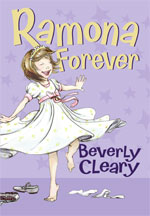
A couple of nights ago, we finished reading Ramona Forever. Out of all the writing courses I have taken, nothing has taught me more about storytelling than reading this book. When you study writing, your teachers will tell you over and over, “Show, don’t tell.” It gets to be a mantra, and some writers do it well, and others don’t.

Beverly Cleary does it so well, my girls enjoy acting out the scenes as I read. We’ve been having so much fun! In Ramona Forever, a wedding takes place. The Quimby girls’ Aunt Beatrice is getting married to Hobart, and the couple will be moving to Alaska. The wedding must take place very quickly before Hobart’s new job begins.

At first, they decide they will only have a quick courthouse wedding ceremony, but then the Quimbys decide maybe they can throw together a simple wedding in two weeks. Can it be done? Ramona and Beezus will be the flower girls.

Now here is what is so adorable, and why Beverly Cleary is such a master storyteller. How does she let readers know how quickly the wedding was planned?

Uncle Hobart does all the wedding planning in one day at the mall (for those of you who’ve had extravagant weddings, can you laugh at this one? I did). He goes to one shop and lets the girls pick out flower girl dresses. Then it’s time to pick out flowers. First, they take a break and go get some ice cream.

They arrive at the florist shop while licking their ice cream cones, and the florist says they can’t come in the shop until they finish. So what does Uncle Hobart do? He stands OUTSIDE the shop, holding his ice cream cone, and picks out the bridal bouquet, the flower girl nosegays, and the groomsmen boutonnières. OUTSIDE THE SHOP! He just points and tells the florist what he wants.

Later, we learn that … oops … he forgot to order flowers for the church. No problem. They just call around the neighborhood, and the ladies gladly supply flowers from their gardens. The final wedding preparations are hilarious, as everything is last minute, yet it all comes together.

Another scene my girls have enjoyed acting out is what happens during the wedding. The groom’s mother has sewn the wedding ring too tightly to the ringbearer’s pillow. (Howie is the ringbearer, miserable in his Little Lord Fauntleroy knickers and knee socks.) When Hobart, the groom, tries to remove the ring, it’s stuck! He yanks and yanks — and finally the ring pops loose and flies out of his hands! The wedding guests are shocked! And the ring is missing.

Then Ramona notices the ring has landed underneath the heel of the bride’s shoe. She sees it there, gold and shimmery, in the lights of the church. What should she do? She has been told to be still and not move! And she’s also afraid that if she moves, people will notice she’s not wearing shoes — her shoes were too small, and so she had to take them off before the ceremony so she could walk down the aisle.

Here is a decision to make! My girls loved this, as I read it. I asked them, “What would you do?” They’ve been flower girls in two weddings, and know how nerve-wracking it can be to be in front of people in a wedding.

At last, Ramona bravely crawls over to the bride’s shoe and picks up the ring. She’s the hero! We were so proud! Over and over again, my daughters wanted to act out this wedding scene, using the footpost of their bed as the bride’s shoe. (My turn! My turn! It’s my turn to be Ramona, OK?)

The book doesn’t end there — oh no. The story continues with Mrs. Quimby having a baby, who we find out will be a daughter. How will Ramona accept the fact that she’s no longer the baby? She’ll be the middle child. Reading this book, chapter by chapter, has brought out so many great discussions. I wouldn’t trade these memories for the world.

Each chapter of Cleary’s books has a clear story arc — a beginning, conflict, and resolution. Each chapter can be read as a stand-alone bedtime story. Yet unlike a short story, this children’s novel gave us something to look forward to every night at bedtime. We couldn’t wait to see what would happen next! Now we’re moving onto the last book of the series, Ramona’s World.

As an aspiring writer, these are the kinds of stories I want to create. Characters and plots that are timeless, that draw parents and children together as they read.

Last year, Beverly Cleary celebrated her 90th birthday. In this San Francisco Chronicle article, we can see why she has such timeless appeal:

“I love Ramona because she acts like a child and not like the perfect girls you see in some of the books you read these days,” says Felicity Connor, 12, of San Jose, who devoured the Ramona books five years ago. Felicity still remembers when Ramona put toothpaste on the bathroom mirror. “Haven’t I done something like that?” she asked her mother, who stood nearby at the Barnes & Nobles bookstore at Westgate Mall in San Jose.

It’s this kind of appeal across generations and nationalities that has kids and adults coming back to Cleary’s books. Lalicki says Cleary gets about 100 letters a month from children, parents, grandparents and teachers.

As for her competition, Cleary says she doesn’t read it. She’s thumbed through a Harry Potter book, but didn’t finish it. “I immediately noticed that the pacing of the books is very fast and something was happening every minute,” she says. “This gets kids reading faster, so they can get to the end quicker.”

But Cleary, who wrote all of her books in long hand and hardly ever uses the Internet, says too much too soon for children could have its consequences.

“Kids should be free to learn at their own pace and not in a rush to become adults.”

In case you missed it, here’s that last line again:

KIDS SHOULD BE FREE TO LEARN AT THEIR OWN PACE AND NOT IN A RUSH TO BECOME ADULTS.

Amen.

I love Beverly Cleary.

Whenever I think about giving up blogging (which, lately, has been about once a day), I come across a person like this. And I thank God for this little spot I have where I can sit down for 15 minutes and share my thoughts with you. The hundreds of you who are reading this, and the two or three of you who comment. Thank you for reading here! I know that I can’t give this up … not yet.


January 12, 2007

Ann Voskamp and Tonia Peckover have created a new blog to explore The Sacred Everyday.

Here’s what Ann says about it:

“In 2007, I am exploring, living, writing, what it means to, consciously, have Jesus keep company with us in this home. Tonia and I have created a space to process the journey …

I thank you for being you and sharing the journey…wherever it weaves… on our way Home to Him. All is gift… Ann”

I’m sure Ann and Tonia’s site will be full of beautiful writing and joy. I’m looking forward to browsing through their growing cyberlibrary of favorite inspiring books.


January 11, 2007

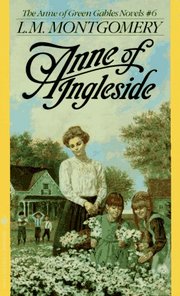
I’ve been reading Anne of Ingleside in the boxed set of Anne of Green Gables books we bought for our daughters for Christmas. Anne is grown up in this novel, married to handsome doctor Gilbert Blythe — and the mother of six children!

As she is settling her son, Jem, to sleep one night, he asks her:

Mummy, will you tell me a bedtime story that will send a cold chill down my spine? And sit beside me afterwards till I go to sleep?

And I love Anne’s answer:

What else are mothers for, darling?

By: Heather Ivester in: Books,Motherhood | Permalink | Comments & Trackbacks (3)


January 10, 2007

I’m hanging out at Pioneer Parenting today and hope you’ll stop over for a visit. Author Mary DeMuth has totally revamped her site, and it’s even more of a great place to grow in your journey as a parent.

Mary is gathering an eclectic variety of articles written by and for parents, and she let me share with her readers my passion for journaling.

Do you keep a journal? What do you write in it? I’d love to hear from you over at Pioneer Parenting.


Shannon’s hosting a themed “heathy eating” edition of WFMW today over at Rocks in My Dryer. Yep, we’re all in this together, trying to work off those pounds that crept on during the holidays.

The only way I could get through all the stress of shopping, decorating, and going to parties was by eating loads of chocolate, alternating salty/sweet snacks, and drinking coffee. It got me through it, and now my stress is showing up on my waistline.

But what to do? My family doesn’t need to eat low-fat; only I do! In fact, my husband doesn’t like ANY food that has “low fat” on the label. If you’re a mom with a house full of kids, you know how pasta, rice, bread, and potatoes can stretch your food budget and make everybody feel satisfied. Yet all those starchy foods are what OUR bodies don’t need, if we’re trying to slim down.

So I’m heading back to The South Beach Diet — actually not the strict phase 1, but more of a phase 2. If you’ve never read this book, it’s a good one, and I’m sure your library has it.

You basically cut out those things I mentioned above: pasta, rice, bread, potatoes — and anything with sugar in it. Even fruit, if you want to do the strict phase 1 (which lasts for two weeks). You still eat plenty of dairy products, protein-rich foods, and vegetables. If you follow this plan and increase your exercise, you will easily drop ten pounds in two weeks. (And weirdly, you won’t be hungry for junk food. It somehow, mysteriously works, after a couple days of withdrawal).

Here’s what I do when I’m South Beaching, yet feeding my family regular meals. I buy about five of those salad bags a week, and this is what I base my meals on for lunch and dinner. I fix myself a HUGE bowl of salad and toss in everything I can — beans, tuna, cheese, raw veggies, etc.

For example, if I’m feeding my family chicken and rice, then I’ll put chicken on my salad and skip the rice. If they’re eating spaghetti with meaty/tomato sauce, then I’ll put the sauce right on my lettuce with some cheese. It’s tastes pretty good. What’s even better is that my energy goes up, and the numbers on the scale go down.

It’s hard to do this alone, though. It’s so helpful to have an accountability partner. One thing I really picked up from reading The South Beach Diet is the obesity-diabetes-heart disease connection. Being overweight is often just an outward sign of the havoc that our poor diets and sedentary lifestyles are wreaking on our bodies: especially our vascualar systems.

Heart disease is the #1 killer of women, not cancer. Yet 80% of heart disease can be prevented. The South Beach Diet explains it all. I’m still trying to drop my last stubborn 20 postpartum pounds — and the reason why I haven’t is because I’m carrying around my junk food addictions stuck right around my middle.

Well, it’s a new month, a new year, and I’m going to keep on trying. The South Beach Diet has worked for millions. And it works for me!